How Dental Implants Can Help You Get Your Smile Back
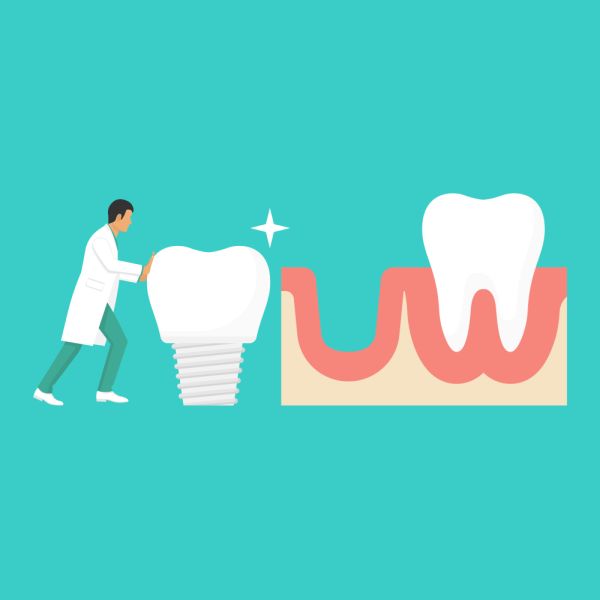
Many people lose one or more of their teeth due to age, decay or an accident. Besides having difficulty with chewing food, the loss of teeth can also lead to low self-esteem. One way of resolving these issues is to get dental implants. A dental implant procedure involves the permanent placement of teeth through surgical procedures in the upper and/or lower jaw. The teeth are connected through connectors called abutments, which are placed on top of the implant. During this process, a custom-made crown matching the rest of the teeth is placed on top of the tooth.
Benefits of dental implants
Regaining a confident smile
Depending on the position of the tooth, teeth loss can make anyone very self-conscious about smiling in public. Dental implants can help the person regain their lost confidence.
Restoring the ability to eat favorite foods
Losing teeth can reduce the ability to eat everything that they want. This not only means that we cannot enjoy the foods we like but can also affect our health. Through dental implants, these functionalities can be brought back, enabling us to eat everything that we want.
Providing support for adjacent teeth
The empty space left by the lost tooth can make the adjacent teeth move out of their position, which leads to misalignment. An implant fill will this space, enabling the teeth to maintain their position on the jaw.
Help to prevent bone loss
Teeth loss also tends to trigger bone-loss in the jawbone. The connecting of teeth provides the jaw with the stimulation it needs to maintain itself. Unlike other replacement procedures, dental implants provide the stimulation that the jaw needs, thus helping it maintain its bone mass.
Restoring bite force
The implants consist of a titanium post that is placed in the bony socket of the jaw. This enables the person to bite more or less in the same way they bite with a natural tooth.
Preventing changes in the shape of the face
Our teeth support the structure of our face. If the teeth are no longer there to provide this support, the structure of the face can change, making us appear older. Implants support the face in a similar way to natural teeth, helping it maintain its shape.
Dental implant types and procedure
Dental implants are one of two types: endosteal or subperiosteal. Endosteal implants are the ones that people usually refer to when talking about dental implants. It involves embedment of the titanium implant in the bony socket of the jawbone. After the implant is placed, the area is allowed to heal for a period of four to six months. Once healed, the tooth is attached to the titanium post.
The subperiosteal method is different from endosteal as the implant is not placed in the socket. In this procedure, the implant goes on or above the jawbone. Subperiosteal treatment is preferred by a patient who does not want to tamper with their jawbone. It is also used for people who cannot receive implants in their jaw because of a lack of bone.
If you are concerned about your dental health or suffering from confidence issues due to a lost tooth, consult your physician to discuss the possibility of a dental implant.
Request an appointment here: https://familychoicedentistry.com or call Family Choice Dental at (505) 634-5657 for an appointment in our Albuquerque office.
Check out what others are saying about our dental services on Yelp: Dental Implants.
Related Posts
A damaged tooth can be uncomfortable and make eating difficult, but quick treatment can restore function and appearance. An emergency dentist is a general dentist who offers fast, effective care to address urgent dental concerns. Their goal is to protect the tooth and prevent further complications. Whether caused by an accident, infection, or another unexpected…
An emergency dentist is essential for anyone facing unexpected dental issues that require immediate attention. Whether the issue is a severe toothache, injury, or infection, seeking help from an emergency dentist provides prompt evaluation and treatment to prevent further complications. Taking immediate action allows patients to alleviate pain and avoid long-term damage to their oral…
While clear braces can straighten teeth with brackets that blend more naturally with the smile, proper care helps keep them clean, comfortable, and effective. While these braces work much like traditional metal braces, their tooth-colored or ceramic brackets can show stains more easily when patients do not follow a strong oral hygiene routine. With daily…
An emergency dentist offers urgent and specialized care for unplanned dental issues, especially when severe pain or sudden trauma requires immediate attention. These situations can feel overwhelming and may raise many questions about what to expect and how to prepare. Therefore, it is good to have a list of questions to ask before arriving at…