Can Invisalign® Invisible Braces Help Those Diagnosed With TMJ?
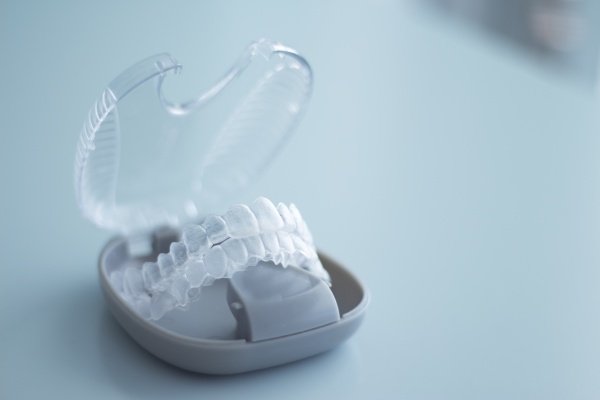
Invisible Braces like Invisalign® can be used to alleviate the symptoms of temporomandibular joint disorder (TMJ). The temporomandibular joints are a pair of hinge-like sliding joints that connect the lower jaw to the rest of the skull. Issues that develop within these joints can lead to a variety of symptoms like:
- Gum recession
- Headaches
- Teeth grinding
- Enamel erosion
- Cracked and broken teeth
- Sore jaw and facial muscles
TMJ disorders are sometimes caused by the temporomandibular joints being misaligned. Dentists can be quite helpful when it comes to treating the symptoms of this condition, and invisible braces are one of the tools at their disposal.
How invisible braces fix the symptoms of TMJ disorders
Invisible braces cannot be used to fix TMJ disorders directly, but they can be used to alleviate the symptoms. For example, people with TMJ often develop a bad bite. Invisible braces can be used to realign the patient's bite so their teeth fit as they should when they close their mouth. Invisalign® also serves as a protective barrier that protects teeth against grinding. The clear aligner serves as a barrier that protects against having a bad bite.
Benefits of choosing Invisalign®
Invisible braces provide a subtle way to improve a patient's bite while their TMJ disorder is being treated. The benefits of choosing Invisalign® over other alternatives like ceramic and metal braces include:
1. Does not promote tooth decay
Patients with TMJ already have so much to deal with, and metal braces can end up making their life more difficult. These oral appliances trap food particles that can be converted into acids by oral bacteria, and they get in the way of brushing and flossing. As a result, the patient becomes more susceptible to tooth decay.
With Invisalign®, the patient gets removable aligners that can be taken out for meals or oral hygiene. That protects the patient against tooth decay, since they can continue to clean their teeth like they always have.
2. Is more convenient
Invisalign® aligners do not come with the same hassles that metal braces and ceramic braces come with. They get more precise treatment, which leads to shorter treatment times and less discomfort.
Since Invisalign® aligners are removable, the patient gets to take them out for meals. This allows them to continue to enjoy all their favorite meals. People with metal or ceramic braces do not have this option. The brackets and wires that come with these appliances are magnets for food particles. To make matter worse, cleaning around them can be quite difficult.
Get the treatment you need
Living with temporomandibular joint disorder can be quite uncomfortable. Fortunately, there are several ways dentists can minimize these symptoms and treat the condition. Call or visit our Albuquerque clinic if you have the symptoms of TMJ. Our dentist will evaluate your condition and perform any appropriate treatments needed.
Request an appointment here: https://familychoicedentistry.com or call Family Choice Dental at (505) 634-5657 for an appointment in our Albuquerque office.
Check out what others are saying about our services on Yelp: Read our Yelp reviews.
Related Posts
An emergency dentist is essential for anyone facing unexpected dental issues that require immediate attention. Whether the issue is a severe toothache, injury, or infection, seeking help from an emergency dentist provides prompt evaluation and treatment to prevent further complications. Taking immediate action allows patients to alleviate pain and avoid long-term damage to their oral…
While clear braces can straighten teeth with brackets that blend more naturally with the smile, proper care helps keep them clean, comfortable, and effective. While these braces work much like traditional metal braces, their tooth-colored or ceramic brackets can show stains more easily when patients do not follow a strong oral hygiene routine. With daily…
An emergency dentist offers urgent and specialized care for unplanned dental issues, especially when severe pain or sudden trauma requires immediate attention. These situations can feel overwhelming and may raise many questions about what to expect and how to prepare. Therefore, it is good to have a list of questions to ask before arriving at…
Dental implants provide a fixed tooth replacement option for individuals seeking to restore chewing ability, speech, and the appearance of their smile after tooth loss. Traditional dentures can effectively replace missing teeth, but removable appliances often require adjustments as the gums and jawbone change. Understanding these eight differences between each option can help patients explore…